After visiting 54 countries and all seven continents over the past few years, Erin and I often find ourselves comparing new destinations to places from past trips… a bad habit, we know.
But Antarctica truly is a place unlike any other. Dramatic icy landscapes, close‑up encounters with wildlife, thrilling Zodiac landings, all aboard a small but luxurious expedition ship.
It’s a bucket‑list trip in every sense of the phrase.
At the same time, Antarctica can feel overwhelming and expensive, which is why I wanted to step out of my comfort zone and answer all of your questions about the most insane place we’ve ever been, not with a beautiful video, but with words in an article.
We’ll cover everything from how to get to Antarctica and what to pack, to what daily life is like onboard, wildlife and activity highlights, and whether the experience was really worth the investment of both time and money.
So grab a hot drink and a notepad and let’s head to Antarctica!
Getting to Antarctica
Most Antarctic expeditions start from the tip of South America. In our case, that meant getting to Ushuaia, Argentina — the world’s southernmost city. Most routes fly into Buenos Aires (or sometimes Santiago, Chile) and then connect onward, so plan for at least a full day of travel plus some buffer time.
It’s smart to arrive in Ushuaia a day or two early, not only to rest up but also to hedge against flight delays. Missing the ship’s departure because of a late flight is not the ideal start to your trip.
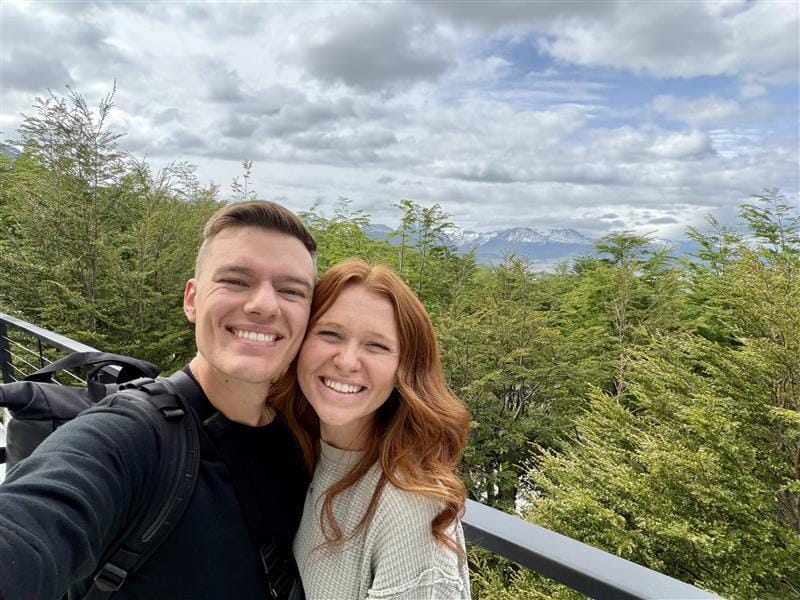
Arriving at the Las Hayas Hotel in Ushuaia, Argentina
Thankfully, most operators (including Polar Latitudes) think ahead and build a buffer day into the itinerary.
Once in Ushuaia, you immediately feel the expedition vibe. The town is a launch point for adventurers, complete with penguin‑themed shop signs and last‑minute gear for sale. We met our Polar Latitudes expedition team at the airport, and after one night at Las Hayas Resort (included with our booking), we were ready to board the Ocean Albatros, our home for the next 12 days.
As Polar Latitudes’ newest expedition vessel, the excitement surrounding this ship (from both crew and passengers) was palpable. After a safety briefing and settling into our cabin, we set sail down the Beagle Channel, officially beginning our journey to Antarctica.
What to Pack and Wear for an Antarctic Cruise
Packing for Antarctica requires some careful planning. Baggage allowances are often limited (usually one checked bag and a carry‑on), and cabin storage can be tight. So the key is layering and focusing on essential gear for windy, cold, and wet conditions.
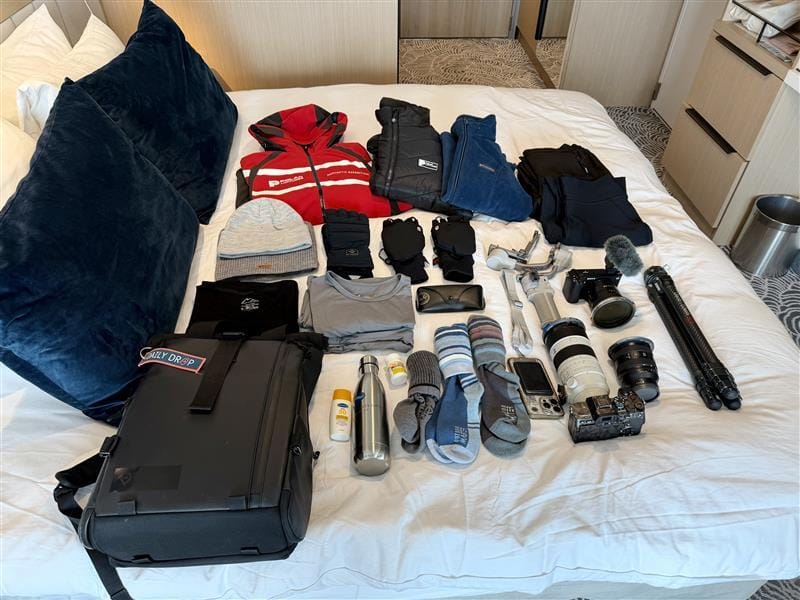
Some of the key items we packed for our voyage
Base Layers and Insulation
Pack thermal base layers (merino wool or synthetic) and comfortable mid‑layers for around the ship. While it’s cold, most visits happen during the Antarctic summer, when temperatures are milder than you might expect. You’ll also warm up quickly during hikes, so layering is essential.
Waterproof Outerwear
A waterproof jacket and pants are a must for snow, rain, and Zodiac splashes. Polar Latitudes provides a heavy red expedition parka and rubber boots for each guest to borrow, plus a nice puffer jacket you get to keep. The main item you’ll need to bring with you is a good pair of waterproof pants, which are required for landings.
Accessories
Bring a warm hat (beanie and/or buff), at least two pairs of insulated gloves, and quality sunglasses. Yes…you absolutely need sunglasses in Antarctica. The glare from ice and snow on sunny days is intense, and polarized lenses help reduce reflections.
Footwear
Waterproof rubber boots are provided for shore landings. You’ll also want comfortable shoes or slip‑ons for on board the ship, and maybe sneakers if you plan to use the ship’s gym. The onboard vibe is casual, so you can leave the stilettos at home.
Daypack & Extras
Pack a small waterproof backpack or dry bag for landings to carry your camera, water bottle, and extra layers. Hand warmers and high‑SPF sunscreen are also surprisingly important since the UV exposure can be strong even in the cold.
Tech & Camera Gear
If you’re anything like me, you’ll take hundreds (if not thousands) of photos. Bring plenty of spare batteries and memory cards. Cold temperatures drain batteries quickly, so keep spares in an inner pocket to keep them warm.
📸 Pro Tip: For my fellow camera nerds, I brought two Sony camera bodies with a 16mm prime, a 20–70mm zoom, and a 70–200mm telephoto. I also packed a 2× teleconverter, but the wildlife gets closer than you’d expect, so I never needed more than 200mm. And if all of that sounds like another language, don’t worry…a good smartphone camera will do just fine.
Ship Wi‑Fi is slow (it is Antarctica, after all), so bring an SSD or other backup solution to store your photos locally.
Crossing the Drake Passage (a.k.a. the “Drake Shake”)
Let’s talk about the Drake Passage… the infamous gateway to Antarctica. This 500‑mile stretch of open ocean between South America and the Antarctic Peninsula is where the Atlantic, Pacific, and Southern Oceans converge, creating powerful currents and winds.
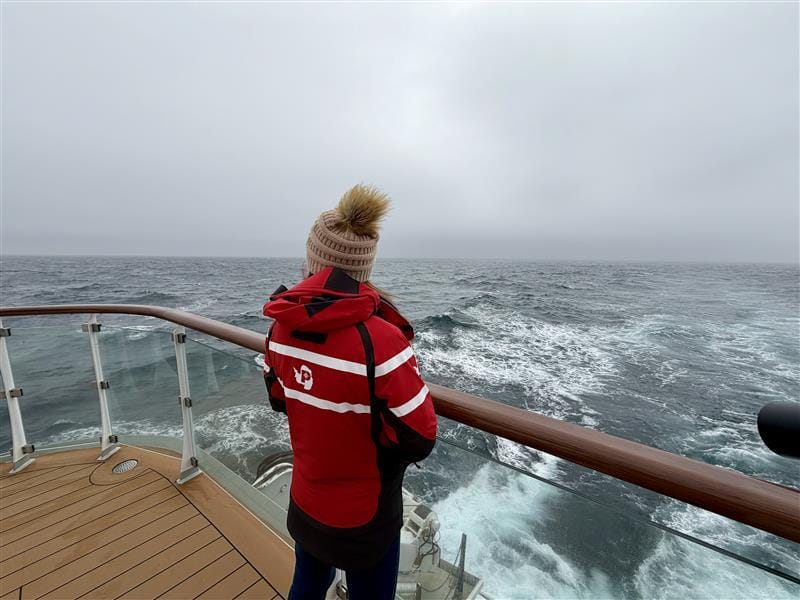
A VERY calm view of the Drake Passage…
If you hit rough conditions, you’ll experience the infamous “Drake Shake.”
If you’re lucky, you’ll get the calmer “Drake Lake.”
In our case, we encountered 20‑foot swells, which honestly sound worse than they felt. The Ocean Albatros’ stabilizers and X‑Bow design made a noticeable difference, and seasoned crew members told us the ride was smoother than on many older ships.
That said, nearly everyone used motion‑sickness patches, wristbands, or medication—and we’d recommend doing the same. It’s better to be prepared than miserable.
👀 Top Drake Passage Tip: Start seasickness remedies the night you leave port, stay hydrated, and get fresh air if you start to feel off. Erin and I never felt unwell, and I can promise you this: once the Drake is behind you it’s all worth it.
Daily Landings and Wildlife Encounters
Once we reached the shelter of the South Shetland Islands and the Antarctic Peninsula, the real adventure began. Our days were built around twice‑daily excursions, weather permitting, consisting of Zodiac cruises and/or landings.
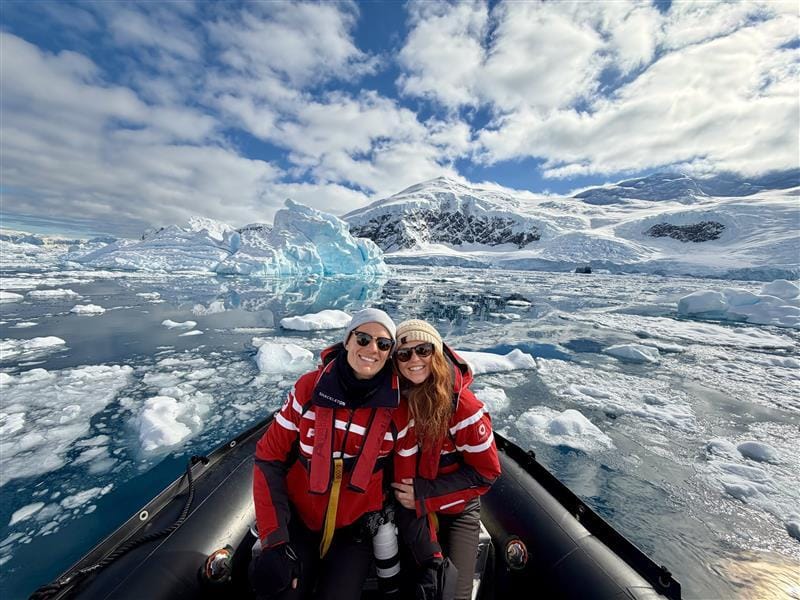
Zodiac Cruise through Neko Harbour
On our very first excursion, we were immersed in a world of more than 100,000 penguins — and while I can’t convey the aroma through an article, trust me, you’ll smell them before you see them. Everyone must stay on marked paths and keep a five‑meter distance, but watching fluffy penguin chicks beg for food or adults steal rocks from neighboring nests is endlessly entertaining.
In early austral summer (November and December), penguins are busy courting and nesting. Later in the season, chicks hatch, and colonies become even more chaotic, but every time of year offers something different.
Each landing site had its own personality. Some featured rocky shores scattered with whale bones and historic relics like old research huts or whaling station remains. Others involved steep hikes up snowy hills to sweeping panoramic views. Guides typically offered both shorter and longer hike options, so you could choose your own adventure.
Weather changes quickly, so flexibility is key. The itinerary you see online is always Plan A, but most days ended up as Plan D or E, and that adaptability is part of what makes Antarctic travel so special.
Life Aboard the Ocean Albatros
One of the biggest surprises of our trip was how much we loved the Ocean Albatros itself. Designed to be both comfortable and capable, the ship carries around 170 guests, which is small enough for an intimate atmosphere that meets IAATO landing limits, yet large and stable enough to handle the Drake Passage.
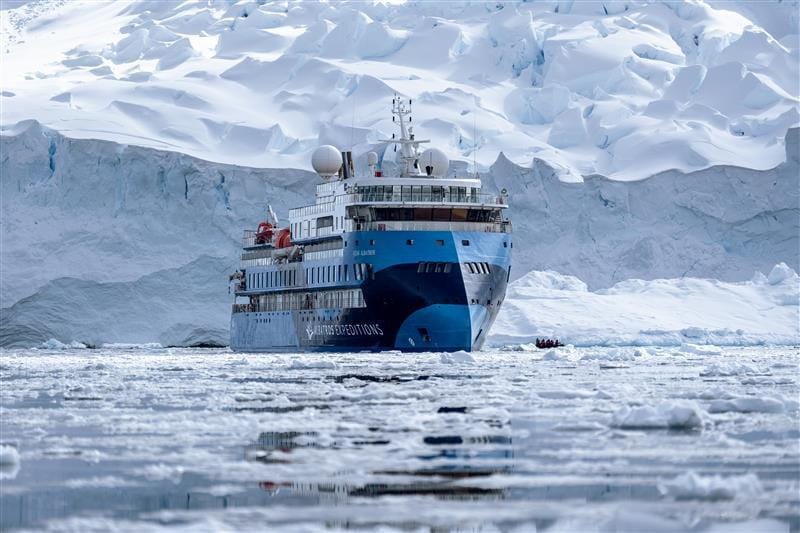
The Ocean Albatros Floating in Neko Harbour
The ship feels more like a floating basecamp than a traditional cruise ship. Cabins are modern and clean, common areas are filled with windows, and there are multiple observation decks, including two hot tubs with 360‑degree views.
Yes, you can soak in a hot tub while island‑sized icebergs drift by.
The advanced stabilizers and X‑Bow hull really shine in rough seas. There’s a dedicated mudroom for gearing up, a marina for kayaks, a cozy lounge and bar, panoramic dining rooms, a small gym, and a sauna. The ship is also designed with sustainability in mind, which is a nice touch, knowing this pristine environment is being respected.
What truly stood out, though, was the crew and expedition staff. Polar Latitudes assembled an incredible team of experts, including marine biologists, geologists, wildlife photographers, and seasoned polar guides. Every evening, we gathered for a daily recap and briefing, where the expedition leader outlined plans for the next day and the naturalists explained what we’d seen so far.
These sessions were relaxed and social, not lecture‑like, so we’d grab a drink, exchange stories, and learn a ton without ever feeling bored.
Meals on board were another highlight. Breakfasts and lunches were served buffet‑style with plenty of variety, while dinners were sit‑down affairs featuring surprisingly gourmet dishes. You definitely won’t go hungry, and if anything, “polar pounds” are very real. There’s no Vegas‑style entertainment onboard, but that’s intentional. The real show is outside.
Daily life settled into a comfortable rhythm. Wake‑up calls came around 7:00 a.m., followed by breakfast and morning excursions. After returning to the ship for lunch and repositioning, we’d head back out in the afternoon for another landing or Zodiac cruise. Evenings wrapped up with daily recaps, dinner, and rest before doing it all again, but no two days felt the same.
Additional Adventures: Kayaking, Polar Plunge, and Camping
Beyond the standard excursions, our voyage offered optional activities that made the experience even more unforgettable.
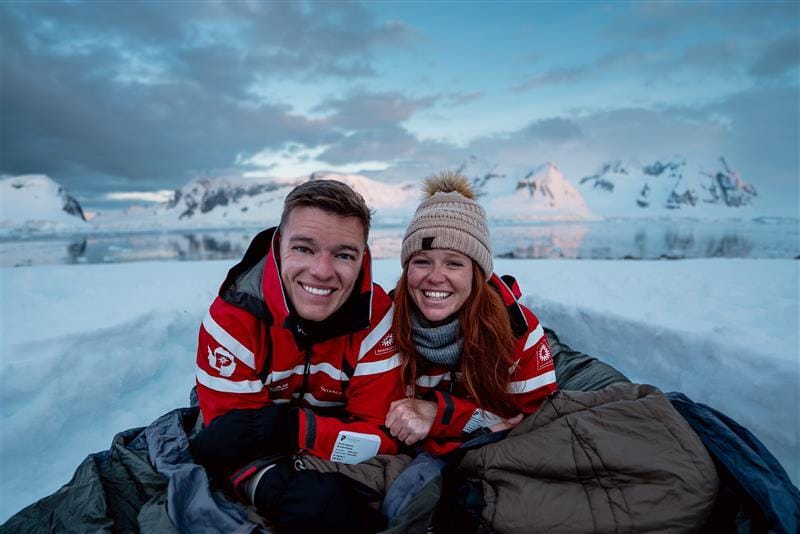
Our open-air campsite for a long, cold night on the ice
Kayaking Among Icebergs
Sea kayaking in Antarctica was one of the most peaceful experiences of the entire trip. We signed up in advance, as spots are limited, and the Discovery Kayaking program allowed us to choose one day, while a more immersive option lets you kayak daily.
The Polar Plunge
The polar plunge is exactly what it sounds like…jumping into near‑freezing Antarctic water for bragging rights and an epic photo. It’s optional, but about half of our ship participated, including us. The water was 29°F (‑1.6°C), and yes, it was worth every second of shivering.
Camping Overnight on the Ice
Camping was the grand finale of our adventure. Polar Latitudes offers limited overnight camping opportunities on select voyages. After dinner, our adventurous (and somewhat crazy) group headed ashore with camping gear while the rest of the ship watched (and laughed) from the warm ship.
The crew provided expedition‑grade sleeping bags and bivy sacks but no tents, just open‑air camping! The sun barely sets in the summer, but we managed to get a few hours of rest and were picked up just after 6:00 a.m.
Cold? Absolutely. Worth it? One hundred percent.
Cost and Value: Was It Worth It?
By now you’re probably thinking, this all sounds amazing…but what’s the damage? It’s no secret that an Antarctic expedition isn’t known for being a budget-friendly vacation.
But there are more ways to limit the cost than you may think. The Ocean Albatros offers a wide range of cabin options, from interior and triple rooms to high‑end suites. But here’s the truth: your cabin choice has zero impact on the experience, plus you’re rarely in your room except to sleep.
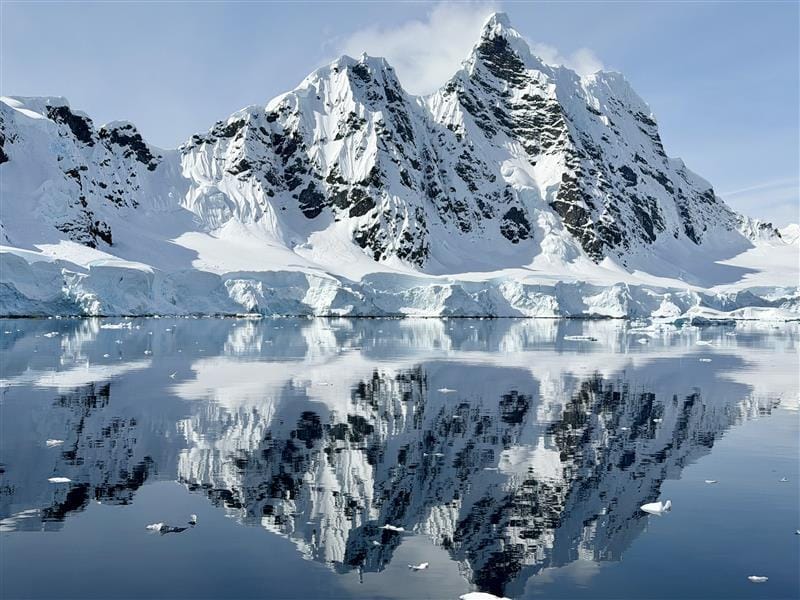
The incredible morning views from our balcony
Polar Latitudes also runs frequent promotions, and last‑minute deals are sometimes available if you are more flexible.
As an added bonus for reading this far, if you tell them we sent you, you'll get an exclusive discount on your voyage. It’s still an investment, but every bit helps.
We were surprised by how many younger, budget‑conscious travelers were on board, many of whom saved for years or used points and miles to offset costs. And if this once-in-a-lifetime trip is a priority for you, then with a little extra planning, you can find ways to make it happen.
Our booking included the pre‑embarkation hotel, cabin, all meals, excursions, and standard activities. Specialty activities like kayaking and camping cost extra but were well worth it. You’ll still need to budget for international flights, travel insurance, and gear, but smart planning can reduce those costs as well.
So, was it worth it? Well, as two of the luckiest twenty-somethings who get to call travel a job, our opinion is, of course, biased, and it's important for us to acknowledge that.
But after reflecting on the experience for a few months now and talking about it endlessly with friends and family, we truly believe that the investment is worth every penny.
And we’re honestly surprised that an experience like this isn't more expensive, given the immense cost that must come with operating a luxury ship in the most remote place on Earth. This was a bucket-list, once-in-a-lifetime adventure to our 7th continent that we simply can’t replicate anywhere else.
Bottom Line
Simply put, Antarctica somehow exceeded the high expectations we had for it.
It’s not a trip to take lightly as it requires time, money, and a dash of fortitude (hello, Drake Passage!) But if you have the opportunity, do it. I promise, you won’t be floating past icebergs with orcas surfacing nearby, wishing you’d gone to the Caribbean instead!
If you’re hungry for more detail or just want to see the journey, be sure to check out our two-part video series on this adventure (“We Boarded the Newest Ship in Antarctica” and “Two Weeks in Antarctica – Was It Worth It?”) to witness the visual magic that is Antarctica.
But no video or article can fully capture the feeling of being there. In the end, Antarctica has to be experienced firsthand.
So start saving, bundle up, and get ready for the trip of a lifetime because seven continents and 54 countries later, and we’ve never seen anything like it... not even close!